
FLEXCO NEWS
Webster Engineering Report Validates Flexco Segmented Transfer Plates (STPs) as Compliant Nip Point Guards
Flexco, a global leader in belt conveyor solutions, recently announced that an independent engineering report has confirmed its Segmented Transfer Plates (STPs) can meet or exceed the nip point gap requirements of both ASME B20.1-2024 and EN619:2022 when properly installed and maintained. The report was authored by Mark R. Webster, P.E., current Chair of the ASME B20.1 Safety Standards for Conveyors and Related Equipment Committee and Vice Chair of the ASME Board on Safety Codes and Standards.
In-running nip points are a serious hazard on belt conveyors and a common source of injuries. ASME B20.1, the primary U.S. conveyor safety standard, requires that nip and shear points be guarded and is incorporated by reference into OSHA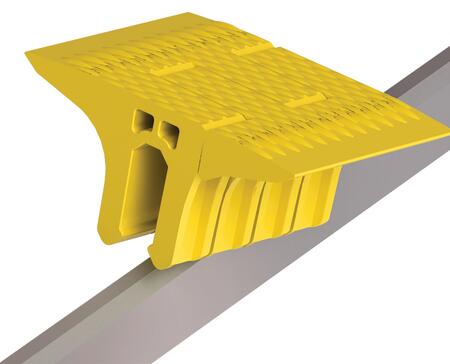 regulations at 29 CFR 1926.6. EN619:2022 specifies that drawing-in points are considered avoided when fitted with nip guards providing a continuous maximum gap of 5 mm (0.20”) between rotating and fixed or rotating components. The Webster report recommends the 5 mm EN 619 gap as a single benchmark, since a guard meeting that requirement also satisfies ASME B20.1 and ANSI B11.19.
"Flexco has always designed Segmented Transfer Plates to protect product flow and improve safety at conveyor transfer points, but having an independent engineering expert validate their performance as nip guards against current standards is a substantial milestone," said Ryan Jackson, Light-Duty Belt Conveyor Product Manager at Flexco. "When STPs are properly installed and maintained, they function as compliant nip point guarding that helps protect conveyor operations’ most important asset: the people who work around these systems every day."
Webster notes from his work as a forensic engineer that personnel coming into contact with in-running nip points is one of the most common causes of conveyor injuries, often while cleaning debris from under conveyors or removing material wrapped around rollers. By covering the transfer gap and reducing debris accumulation beneath the belt, STPs address both the guarding requirement and the conditions that lead workers into hazardous interactions with nip points. It’s important to note that the report emphasizes that adding any transfer plate can also create new nip points, so a qualified team must perform a risk assessment on every conveyor system, and conveyors with missing or damaged segments must be locked and tagged out until repaired.
Flexco STPs feature precision-molded HDPE segments that lock together on a mounting bar and can be easily removed and replaced. Bright yellow segments make missing or damaged pieces immediately identifiable during inspections. Black segments are available where a more uniform appearance is preferred. STPs accommodate belts up to 1500 mm (60”) wide and handle transfer point gaps from 38 mm to 250 mm (1.5” to 10”).
The full report from Webster Engineering LLC is available by clicking here. For more information on Segmented Transfer Plates, visit www.flexco.com.
Published Date
May 07, 2026Product Group
- Belt Protection